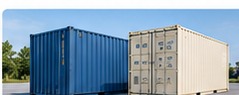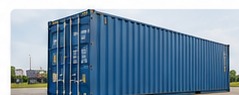
Plan using three measurements: exterior dimensions for placement, interior dimensions for layout, and door openings for loading. The door can be the limiting measurement even when an item would fit inside.
Example internal dimensions
These are rounded examples from Hapag-Lloyd fleet specifications, not a guarantee for a container offered by another seller. Confirm the actual unit whenever an item is close to the limit.
| Container | Interior (feet, rounded) | Interior (meters, rounded) | Approx. capacity |
|---|---|---|---|
| 20ft standard | 19ft 4in × 7ft 9in × 7ft 10in | 5.90 × 2.35 × 2.40m | 33.2m³ / 1,172ft³ |
| 40ft standard | 39ft 6in × 7ft 9in × 7ft 10in | 12.03 × 2.35 × 2.40m | 67.7m³ / 2,390ft³ |
| 40ft high cube | 39ft 6in × 7ft 9in × 8ft 10in | 12.03 × 2.35 × 2.70m | 76.3m³ / 2,694ft³ |
The door is smaller than the interior
On the same example fleet, the standard door opening is about 7ft 8in wide by 7ft 6in high (2.34 × 2.29m). The high cube example has about 8ft 6in of door height (2.60m). These opening measurements matter when moving shelving, palletized goods or machinery.
Measure the item in the position in which it will pass through the doorway. Include any pallet, protective packing, wheels and lifting attachments. A ramp can change the angle and height at the entrance, so do not rely on static item height alone.
Floor area is often more useful than volume
Multiplying the sample internal length and width gives approximately 149 square feet for the 20ft and 304 square feet for the 40ft. Those are calculated empty-floor estimates, before an aisle, shelves or equipment clearance.
Volume describes the whole interior envelope, including space you may not be able to use. Fragile items may not stack. Frequently retrieved stock needs access. Heavy items can create loading constraints long before the container looks full.
Read weight limits separately
Tare is the weight of the empty container. Payload is the load allowance. Maximum gross weight combines container and contents. These figures vary, and a container's marked capability does not establish what a truck, route, site or loading method can safely support.
For dense stock, tell the supplier the estimated load and how it is distributed. A machine on small contact points is a different loading problem from evenly distributed boxes. Ask for a suitable loading and support plan rather than assuming the floor can take any item below the total payload.
Measurements to request before ordering
A clear specification request helps avoid an expensive mismatch. Send the seller the dimensions of your critical item and ask for written confirmation of the relevant measurements. If the seller is allocating from a pool, establish whether they can guarantee your minimum clearance.
- External length, width and height, including any added fittings.
- Usable internal dimensions at the narrowest relevant points.
- Clear door opening with both doors open.
- Threshold height and the loading arrangement you will use.
- Tare, maximum gross and any floor-loading information relevant to your use.
- Space needed for door swing and the final access path.
Common questions
Are all 20ft containers identical inside?
No. External formats are standardized, but internal construction and repairs vary. Use seller-confirmed dimensions for a tight fit.
How much space will insulation use?
It depends on the complete lining system, framing and finish. Deduct the proposed build-up on both sides and at the roof and floor before planning the layout.
Sources & approach
Technical references and supplier guidance used for this guide. Recommendations and worked examples are EzyTrader’s editorial analysis; supplier-specific requirements still need confirmation.
- Hapag-Lloyd: 20ft standard fleet specifications
- Hapag-Lloyd: 40ft standard fleet specifications
- Hapag-Lloyd: 40ft high cube fleet specifications
Images are illustrative, not available inventory. Read our editorial approach.