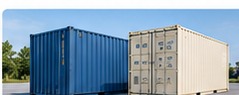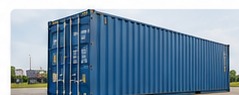
Start with a 20ft container for a smaller storage requirement or constrained site. Consider a 40ft when you need roughly twice the floor space and can accommodate delivery. Choose a high cube when usable height is the constraint.
The three sizes to compare first
The familiar size name describes the outside length. It does not tell you the usable interior, door opening or space needed around the container. Treat a product name as the start of the specification, not a complete specification.
| Format | Typical external footprint | External height | Start here when… |
|---|---|---|---|
| 20ft standard | 20ft × 8ft | 8ft 6in | You need a compact storage footprint |
| 40ft standard | 40ft × 8ft | 8ft 6in | Floor space matters most |
| 40ft high cube | 40ft × 8ft | 9ft 6in | You need more headroom |
Work from a floor plan
List the largest objects and mark them out to scale. Add access space before choosing the length. A container full of occasional overflow stock can use space differently from a workshop store visited several times a day.
For example, two banks of shelves reduce the center aisle. A mower may fit through the door, but its turning path, ramp and attachments still need room. Use the actual dimensions of your equipment rather than a claim about how many bedrooms or boxes a container holds.
Height and floor space solve different problems
A high cube is useful for tall items and extra shelf height, but it does not make a standard-width container wider. If your problem is storing two large machines side by side, extra roof height will not fix it.
Insulation, a ceiling lining or an added floor uses some of the interior envelope. If a future fit-out is likely, sketch the finished usable space rather than assuming the empty steel shell represents the final clearance.
Check two separate footprints
First mark the permanent placement area, including door swing, drainage, access and any required setbacks. Then map the delivery route and unloading area. A site can hold a container but still be impossible for a particular truck to reach.
A pair of 20ft units may offer separate access or staged purchasing, but it also means two units, more doors and possibly more transport charges. Compare that arrangement as a whole rather than assuming two smaller boxes are easier or cheaper.
When to investigate less common sizes
Shorter or longer units and specialty door arrangements can solve genuine constraints. Availability and transport options may be narrower, however. A cut-down container is a modified unit, so ask how the end was rebuilt, what dimensions changed and what guarantee applies.
Do not choose a rare format until you have compared its delivered price against rearranging the site or changing the storage layout. Common sizes give you a simpler starting point for obtaining comparable quotes.
Common questions
Is a high cube longer than a standard container?
Not when both are the same nominal length. A 40ft high cube provides more height than a 40ft standard.
Can I use the exterior dimensions to plan shelving?
No. Use the actual interior measurements, allowing for corrugations, door hardware, linings and installation clearance.
Sources & approach
Technical references and supplier guidance used for this guide. Recommendations and worked examples are EzyTrader’s editorial analysis; supplier-specific requirements still need confirmation.
- Hapag-Lloyd: 20ft standard fleet specifications
- Hapag-Lloyd: 40ft standard fleet specifications
- Hapag-Lloyd: 40ft high cube fleet specifications
Images are illustrative, not available inventory. Read our editorial approach.