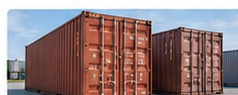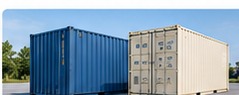
For straightforward on-site storage, begin with a dry container. Compare high cube or alternative door configurations if the standard layout does not meet your needs. Refrigerated and specialist freight containers bring different operating and maintenance requirements.
Type and condition are different choices
Type describes what a container is designed to do. Condition describes its current state and the seller's promise. A high cube can be one-trip or used; a refrigerated unit can have a sound shell but a refrigeration system that needs work.
Avoid treating a product listing as a single label. Break it into size, type, door arrangement, condition and included equipment. This makes it easier to spot what the quoted price actually buys.
| Type | Useful for | Check before buying |
|---|---|---|
| Dry container | General enclosed storage | Weather protection, doors and floor |
| High cube dry | Extra vertical space | Door height and delivery clearance |
| Double-door / tunnel | Access from both ends | Working space outside both door sets |
| Side-opening | Access along the long side | Door swing and opening dimensions |
| Refrigerated / reefer | Temperature-controlled applications | Plant condition, power and service |
| Open-top / flat rack | Specialist cargo | Weather protection and handling plan |
Why dry containers are the starting point
A standard dry unit is a simple enclosed steel shell with cargo doors. For tools, equipment or robust business stock, it is a useful baseline for price comparisons. The simpler configuration also makes it easier to compare products from different sellers.
A dry shell is not a climate-controlled room. Before storing moisture-sensitive goods, decide how you will manage temperature changes, ventilation and damp items. Paying for a cleaner-looking box does not automatically solve these issues.
Choose doors around the retrieval pattern
If you will load once and unload once, end doors may be enough. If you will visit daily, retrieving items from the far end can become the main limitation. A tunnel container can separate two access zones, while side access can suit wide items or a retail-style layout.
Extra openings also need more clear space around the unit and may affect the cost of locks, fit-out and maintenance. Sketch the doors fully open on the site plan. A gate or fence beside the container can defeat the benefit of a side-opening design.
Do not buy specialist equipment for a simple job
A reefer involves machinery, insulation, controls and a suitable power supply. A non-working reefer sold as insulated storage is not the same product as an operational refrigerated container with tested equipment.
Likewise, a flat rack or open-top is not a simple substitute for a weather-protected store. If your load needs specialist handling, ask a transport professional to specify the container and loading method before buying.
Evaluate modifications as a separate project
Windows, extra doors and large cut-outs can change structural behavior and weather protection. Ask who performed the work, what documentation exists and whether the condition guarantee still applies.
If the intended use involves people working inside, discuss ventilation, safe exits, electrical work and local approval with appropriate professionals. A storage-container purchase is only one part of that project; it does not establish that the finished space is suitable for occupancy.
Common questions
Does high cube describe the condition?
No. It describes extra height. You still need a separate condition description.
Is a refrigerated container better for all storage?
Not automatically. Compare the actual temperature-control requirement, equipment condition, electricity, maintenance and delivered price against a dry-container solution.
Sources & approach
Technical references and supplier guidance used for this guide. Recommendations and worked examples are EzyTrader’s editorial analysis; supplier-specific requirements still need confirmation.
Images are illustrative, not available inventory. Read our editorial approach.