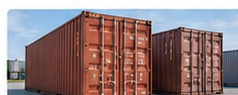
Wind and watertight is a useful starting requirement for ordinary static storage. If you plan to ship cargo, confirm cargo suitability, the required examination or survey, and carrier acceptance. A WWT promise alone does not establish shipping approval.
Two labels answering different questions
WWT usually addresses the container's ability to keep wind and rain out under the seller's terms. Cargo worthy addresses suitability for cargo service. They are related, but neither label tells you everything about appearance, included documentation or the buyer's intended operation.
| Question | WWT | Cargo worthy |
|---|---|---|
| Is weather protection the focus? | Usually yes | Confirm the sales promise |
| Is international transport established by the name alone? | No | No; verify required evidence |
| Can cosmetic wear be present? | Yes | Yes |
| Does the seller include a survey? | Ask | Ask explicitly |
| Typical buyer starting point | Static storage | Cargo transport requirement |
For a container that stays on your property
If you are buying to store robust goods on site, concentrate on leaks, doors, seals, flooring and a suitable support arrangement. Paying for transport-related documentation that your use does not require may not improve that storage function.
That does not mean structural condition is irrelevant. A severe defect can matter even for a stationary box. If you plan to stack, heavily load, lift while loaded or make significant openings, have the specific proposal assessed rather than inferring suitability from WWT.
For a container that will carry cargo
Tell the freight forwarder or carrier what you are buying before committing. Ask what they need to see for the planned route and shipment. Confirm who arranges and pays for any survey and what happens if the unit is not accepted.
BIC explains that approved examination arrangements form part of container safety compliance. A plate is evidence to investigate, not a reason to skip checking the current examination status or the condition of the actual container.
Make the seller's promise precise
Request the written grade definition and the supporting paperwork relevant to your use. Identify the container number on documents and images so you can establish that they refer to the same unit.
If the seller offers a container from a pool rather than a specific inspected unit, clarify how the required grade and documents are guaranteed. A photo of another attractive box does not answer that question.
- What defects would cause the unit to fail your grade?
- Is the quoted unit identified or allocated later?
- Is a current survey included in this exact price?
- What must the carrier approve independently?
- What is the remedy if the delivered condition differs?
Avoid paying for the wrong reassurance
A higher-sounding label does not necessarily mean a cleaner appearance or a more useful storage layout. Likewise, a storage guarantee should not be stretched into a claim about shipping, stacking or conversion.
Write the intended use on your quote request. Then ask the supplier to answer that use directly. It is easier to compare a specific commitment than a sequence of labels that different companies may use differently.
Common questions
Can I export a WWT container?
Do not rely on the WWT label. Confirm required condition, examination, survey and carrier acceptance for the shipment.
Does cargo worthy mean no rust?
No. Cosmetic wear can still be present. Ask for the condition criteria and inspect the actual unit.
Sources & approach
Technical references and supplier guidance used for this guide. Recommendations and worked examples are EzyTrader’s editorial analysis; supplier-specific requirements still need confirmation.
- International Maritime Organization: Convention for Safe Containers
- Bureau International des Containers: examination schemes
- Container Management: shipping container grades
Images are illustrative, not available inventory. Read our editorial approach.